Sourcing custom made hockey jerseys bulk should be the easy part of running a rink program or a reseller operation. In practice, most buyers lose margin to the same three problems: split vendors, inconsistent fabric weight, and size runs that break in the middle of a season.
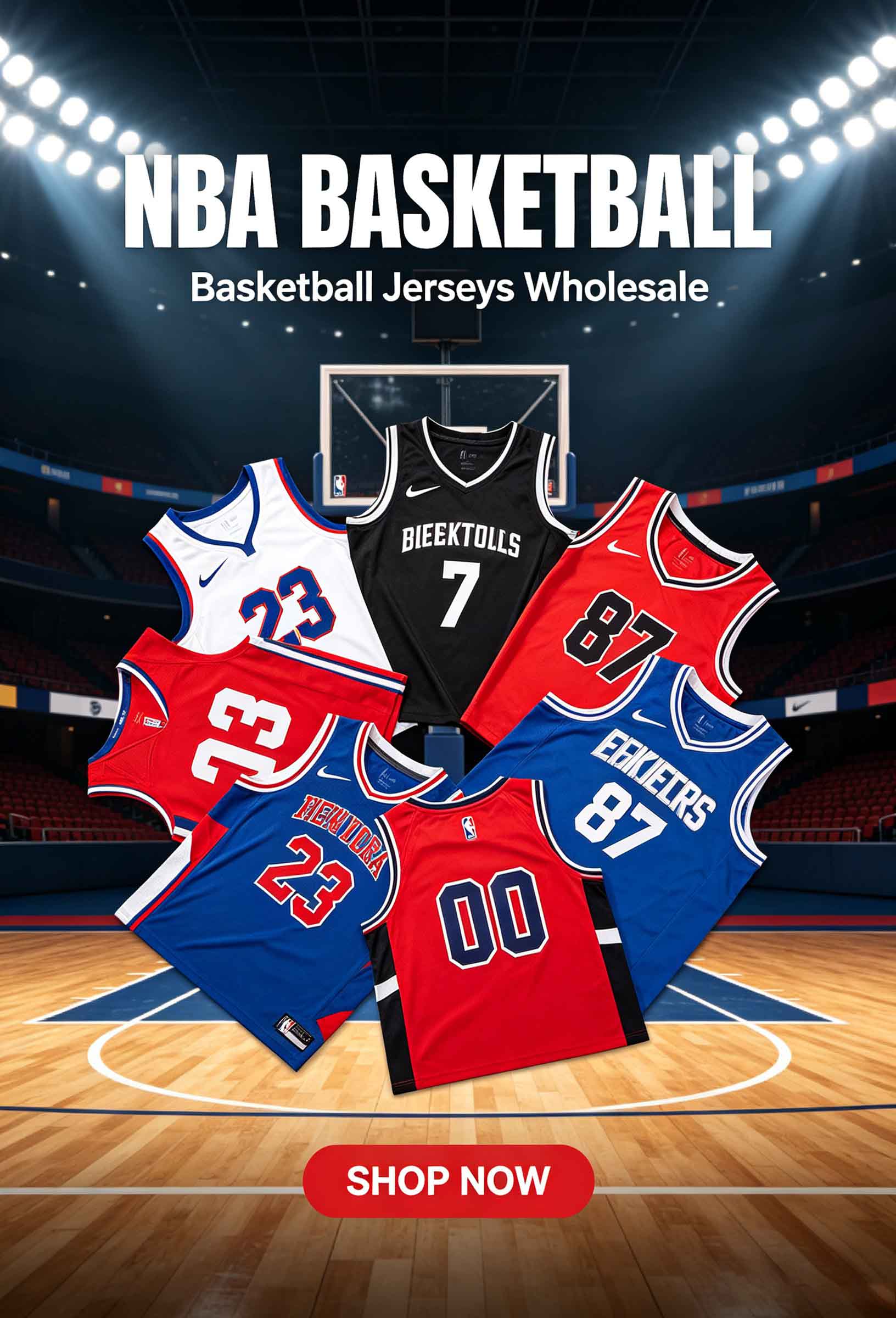
Jerseys Wholesale Hub was built to close those gaps. The hub keeps full-category stock under one roof across NHL, NFL, MLB, and NBA programs, so a single purchase order covers hockey sweaters, football jerseys, and baseball button-downs without four separate freight bills.
Start with fabric weight, not price. Every hockey jersey in the hub runs on 100% breathable polyester mesh, with the flagship build at 300 GSM heavyweight mesh. Lighter 180–220 GSM mesh is available for practice sweaters and summer league sets, but the 300 GSM body is what holds a crest flat and keeps shoulder panels from puckering after repeated wash cycles.
Mesh construction matters more on hockey than on any other sport. Airflow channels move heat out during a 60-minute skate, and the open knit dries fast enough that a jersey worn Friday is ready for Sunday. Tightly woven knockoff fabric traps sweat, gains weight, and starts to smell like a locker room permanently by week three.
For bulk sublimated hockey jerseys, the artwork is dyed into the yarn rather than printed on top of it. Nothing cracks, peels, or lifts after twenty washes. Team names, sponsor patches, and gradient sleeve designs all survive machine washing because there is no plastic film layer to break down.
Double-stitched Tackle Twill numbers and letters are the standard on stitched builds. Twill layers are cut, stacked, and locked down with a dense zigzag border stitch, then bar-tacked at the corners where a digit naturally wants to curl. That is the difference between a number that still sits flat in season three and one peeling off the back in season one.
Behind every stitched emblem sits a soft interior backing layer. It stops the rough underside of the twill from biting into a player's back or shoulders during contact drills. Cheap builds skip this step, which is why players on budget jerseys constantly tug at the chest.
Reinforced collar bands keep the neckline from stretching or curling into a wave after repeated washing. On lace-front and V-neck hockey collars, the band is doubled and stitched with a tighter SPI count so the opening holds its original shape instead of gaping open.
Stress points get extra attention. Z-stitch reinforcement runs along the hem split, underarm gussets, and side seam junctions — the four places where a jersey tears first. Shoulder yokes are double-row stitched, and authentic-style builds include a reinforced fight strap anchor.
Size runs are stocked deep: youth S–XL, adult S–3XL, and goalie cut with extra body width and shortened sleeves to clear a blocker and trapper. If your roster mixes bantam and adult sizes, you can pull the whole spread from one warehouse instead of rationing two size options across three vendors.
Consolidation is where the real savings sit. A reseller ordering custom made hockey jerseys in bulk through our NHL jersey program can stack hockey sweaters, practice shells, and socks into one cart, then add football and baseball stock on the same invoice. One shipment, one customs entry, one freight quote.
Order depth in the core colorways, then add accent SKUs. Black, white, navy, and red move fastest and rarely sit. Specialty colors and third-alternate designs should be ordered lighter on the first run, then reordered once you see which ones clear.
Inspection standards are not negotiable. Bulk runs are checked against an AQL 2.5 sampling plan with a four-point fabric audit. Measurement tolerance is held to roughly ±1 cm on body length and chest width, which is what keeps a size L from one production date matching a size L from the next.
Minimum order quantities start low — typically 10 units per style — with tiered price breaks at 50, 100, and 300 pieces. The step pricing is built so a 300-piece run lands materially below the 50-piece rate, which gives resellers room to protect margin even after shipping and duties.
Pre-production samples are approved before the bulk run starts. You sign off on mesh weight, twill color matching, number placement, and collar shape. Nothing moves to the sewing floor until that sample is locked, which prevents the classic disaster of 500 jerseys arriving with the wrong shade of gold.
Lead times run 3–5 business days on in-stock hub inventory and roughly 12–18 days for full custom production, depending on decoration complexity. Air freight is used for repeat restocks; sea freight is the play on large seasonal buys where the calendar allows it.
Run the margin math before you commit. If landed cost on a stitched hockey sweater sits at a wholesale tier price, and comparable stitched retail runs far higher, the spread covers your freight and still leaves a working margin at a competitive resale number. Volume buyers who move through category leaders such as Jerseys Wholesale Hub use that spread to undercut local sporting goods stores without touching their own floor.
QC your own inbound shipment too. Pull 10 percent of cartons, verify count, check collar shape, and flex a number to confirm the twill is stitched — not heat-pressed. Catch problems within the first week and claims get resolved fast.
Pass care instructions to your end buyers. Cold wash inside out, no bleach, no fabric softener, hang dry. Never iron directly on twill or sublimated print — use a press cloth on low heat. Jerseys handled this way hold color and shape through multiple seasons, which protects your brand reputation more than any ad spend.
Fit guidance cuts returns. Hockey sweaters are cut to layer over shoulder pads, so most skaters should size up one from their t-shirt size. Goalies typically go two sizes up. Publish that note on your product pages and you will cut exchange requests noticeably.
Plan restocks before the season starts. Youth sizes and mid-range adult sizes sell out first; 3XL and goalie cuts move slower. Lock a reorder window around week six of the season, when teams have settled rosters and replacement demand spikes.
FAQ
What is the minimum order for custom made hockey jerseys bulk?
MOQ starts at 10 units per design for stock builds, with better tier pricing kicking in at 50, 100, and 300 pieces. Custom decoration carries the same low entry point.
Are bulk sublimated hockey jerseys durable enough for contact play?
Yes. Sublimated graphics are dyed into the polyester mesh, so there is no surface print to crack. Combined with Z-stitch reinforcement at stress points, they hold up through full-contact seasons.
Can I mix sports on one wholesale order?
Yes. Hockey, football, baseball, and basketball stock ships from the same hub, which cuts freight cost and simplifies customs paperwork on international orders.
How fast can in-stock jerseys ship?
In-stock hub inventory typically leaves the warehouse in 3–5 business days. Custom production runs 12–18 days depending on the decoration and quantity.
Stop piecing together orders from four suppliers and hoping the fabric weights match. Visit shop the full NHL jersey catalog to see live hub stock, tiered wholesale pricing, and low MOQ entry points — then bundle hockey, football, baseball, and basketball into one shipment with fast dispatch and distributor margin intact.