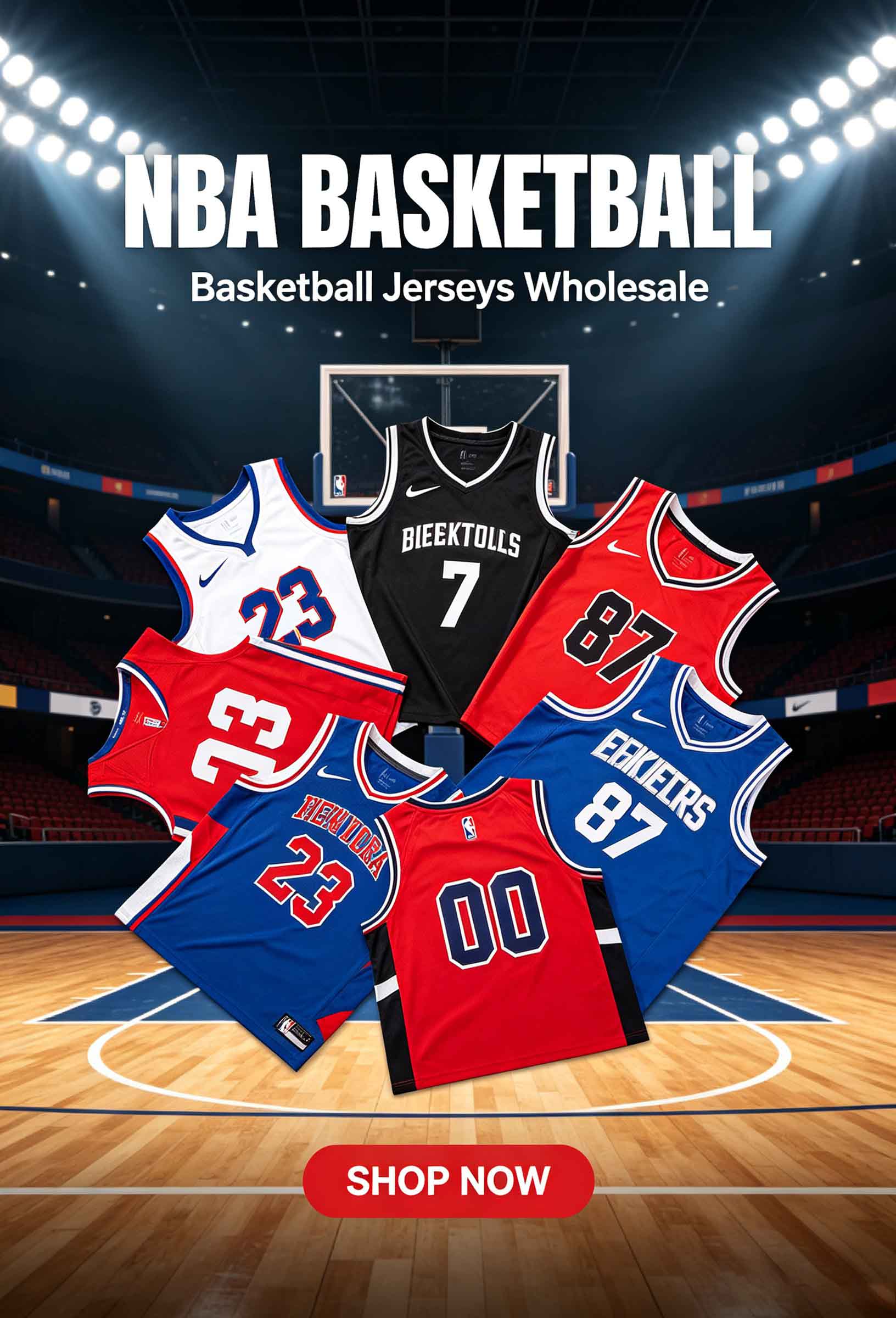
If you are sourcing for a team store, a league program, or a reseller network, the question of the best fabric for NFL jerseys decides your return rate before it decides your margin. Buyers who treat fabric as an afterthought end up with thin, clingy shells that pill after two washes and come back as refunds. The fix is spec discipline at the sourcing stage, not damage control at the retail stage.
Most bulk buyers get burned by the same three problems: fabric weight varies from lot to lot, stitched numbers arrive with loose thread tails, and size runs break in the middle of a reorder. Fixing all three requires one supplier with a single warehouse standard, not five factories bidding against each other on price alone.
Here is what actually separates a wearable jersey from a warehouse-grade product, and how to specify it in a purchase order.
Fabric weight is the first number to lock. Sub-200 GSM polyester feels fine on a hanger and falls apart in a locker room. For fan retail and replica-tier wholesale, 220–250 GSM is the workable floor. For anything sold as premium or game-style, demand 300 GSM heavyweight mesh and verify it with a scale, not a spec sheet.
Weight is easy to fake on paper. Ask for a 10-piece weight check from the production lot: cut a 10cm × 10cm square from three random jerseys, weigh each on a digital scale, and compare against the GSM you paid for. A 12% variance between pieces means the mill is blending yarn lots, and that variance will show up as visible shade differences under stadium lighting.
Mesh structure matters as much as weight. A tight, high-hole-count mesh blocks airflow and traps heat; a wide, floppy mesh snags on pads and velcro. 100% breathable polyester mesh with a consistent hexagonal or diamond pattern gives you airflow plus structural memory, so the jersey does not stretch out at the shoulders after a season of wear.
If the design calls for large graphics, decide early between sublimation and stitched application. Sublimated panels never crack or peel because the ink becomes part of the fiber, but they cannot replicate the raised feel buyers expect on a premium jersey. Stitched tackle twill gives you that dimension and is the correct call for numbers, nameplates, and shoulder marks.
Double-stitched Tackle Twill numbers are non-negotiable above the entry tier. Single-stitch numbers lift at the corners after roughly 15–20 wash cycles. Double stitching with a tight zig-zag border holds the twill flat and prevents the edge from curling, which is the single most common cosmetic complaint on returned jerseys.
Check the stitch density on your sample. Count stitches per inch along a number border: 8–10 per inch is commercial grade, 12 or more is decorative overkill that can perforate the twill. Also run a fingernail along the inner edge of a number. If you feel a hard, scratchy ridge, the factory skipped the backing layer.
Soft interior backing behind every stitched element is what separates a jersey people wear from a jersey people tolerate. A lightweight fusible or knit interlining sits between the twill and the body fabric, so the embroidery never contacts skin. This detail costs cents per unit at production and prevents a large share of comfort complaints in retail reviews.
Collars take more abuse than any other panel. Reinforced collar bands with a ribbed knit insert and a twin-needle finish keep the neckline from stretching into a wave after repeated pull-over wear. Look for a taped neck seam on the inside back collar; untaped seams fray and shed thread within a few washes.
Side panels and sleeve cuffs deserve the same scrutiny. Stretch mesh gussets under the arms improve range of motion for anybody wearing shoulder pads underneath, and a slightly heavier cuff ribbing prevents the sleeve from riding up. Cheap builds use the body fabric for cuffs, which never recovers its shape.
When you are consolidating a multi-team program, the practical shortcut is to source everything from one distribution point that already holds depth across rosters. That is the operational argument for buying heavyweight mesh NFL jerseys through a single hub rather than chasing separate factories per team — one inspection standard, one size chart, one freight consolidation.
Colorfastness testing is where a lot of overseas lots fail quietly. Ask for a wash test at 40°C across three cycles and check for shade shift on the darker team colors, especially navy, black, and deep red. Also request a crocking test on stitched twill, since low-grade twill releases dye onto white body fabric in humid transit.
A workable incoming QC standard for bulk jersey orders looks like this:
- AQL 2.5 general inspection for major defects (open seams, misplaced numbers, wrong colorway)
- AQL 4.0 for minor cosmetic issues (loose thread tails, faint chalk marks)
- 100% weight and size check on the first 50 pieces of each SKU from a new lot
- Shrinkage tolerance under 3% after one wash at 40°C
- Needle detection pass on every carton before packing
Size runs break more reorders than quality issues do. Lock your chest measurements to a stated chart and confirm that the factory measures flat, pit-to-pit, on a relaxed garment. A jersey that fits like a medium in one lot and a large in the next will cost you more in exchanges than the unit savings were worth.
For most adult wholesale programs, a practical fit spread is S through 3XL, with 2XL and 3XL carrying a modest upcharge. Youth sizing should scale proportionally rather than being a shrunken adult pattern — the shoulder-to-hem ratio on youth XS through youth XL is where cheap patterns fall apart.
Tiered pricing is the other reason to keep purchasing under one roof. Ordering 60 pieces across four teams at a hub usually lands you at a better per-unit rate than ordering 30 pieces direct from a factory, because the hub is already carrying the inventory risk and the freight consolidation. Break points typically sit around 24, 72, and 144 units per style.
Restock speed decides whether a reseller can take the second order. Domestic hub stock on core colorways moves in days, while factory-direct production runs 25–40 days plus transit. If a team makes a playoff run, that gap is the difference between selling out and sitting on inventory nobody wants in February.
Pass a simple care sheet to your retail customers and returns drop measurably. Wash cold, inside out, on a short cycle; skip fabric softener because it coats the mesh and kills wicking; hang dry or tumble low. Never iron directly over stitched twill — press from the reverse side with a cloth barrier, or the twill glaze fuses and turns shiny.
Reinforced stitching also means you can skip the dry cleaner. Dry cleaning solvents degrade polyester mesh over time and dull dark colorways. A cold machine wash plus air dry keeps a 300 GSM jersey looking correct for years, which is the cheapest retention tool a team store has.
Store bulk inventory flat or on wide hangers in a climate-controlled space. Heat and UV are what fade jerseys in storage, and stacked cartons near a loading dock door are the usual culprit. Rotation matters too: sell the oldest lot first, and pull the carton liner so the fabric can breathe.
Frequently asked questions
Is 300 GSM too heavy for warm-weather markets? No. The weight sits in the mesh structure, not in trapped heat. A well-built 300 GSM mesh with open hex holes breathes better than a tight 180 GSM knit because airflow moves through the panel instead of sitting on it.
How do I verify stitching quality on a sample before a bulk order? Pull 20 stitches at a number corner with moderate tension. If the seam opens and the thread tails run past the twill edge by more than 3mm, the lot is under-stitched. A clean break at the seam line means the tension is set correctly.
What is a realistic first order quantity for a reseller? 24 to 36 pieces per style is enough to test a colorway without locking capital. Most hubs price the first tier at 24 units and improve the rate at 72 and 144, so build your buy around those break points.
Do stitched numbers cost significantly more than printed ones? Tackle Twill adds material and labor, so expect roughly 15–25% over a sublimated equivalent at the same quantity. The tradeoff is resale value and return rate — stitched jerseys hold perceived value and generate far fewer defect complaints.
If fabric specification, stitching density, and size consistency are already handled at the warehouse level, your job as a buyer gets much simpler: pick colorways, set break points, and let the hub handle the rest. Review the full depth of stock and current tier pricing at www.jerseyswholesalehub.com, where consolidated bulk orders, low minimums, and fast domestic dispatch keep reseller margins intact from the first carton to the reorder.