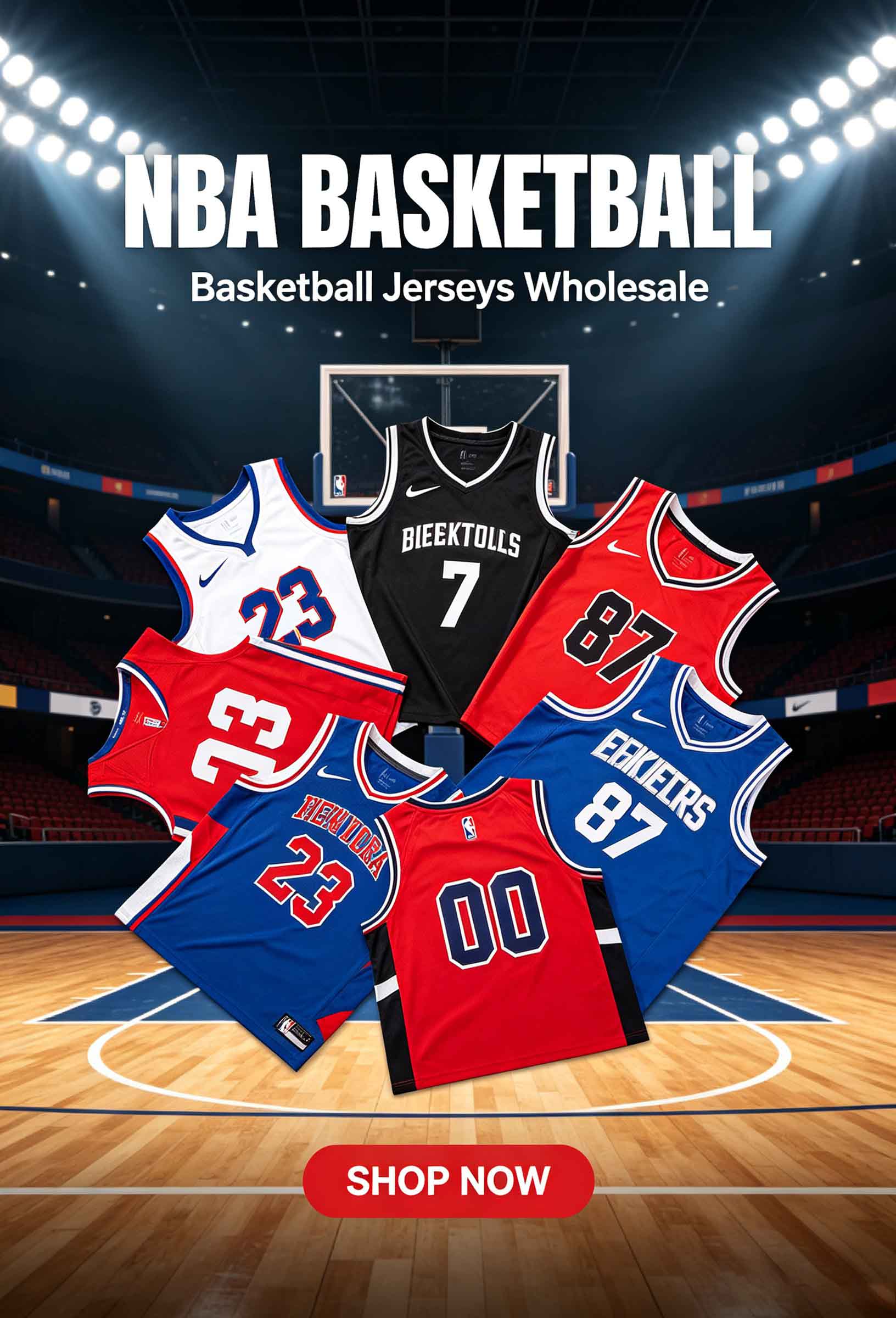
Buyers searching for custom made football jerseys bulk offers usually hit the same wall: five vendors, five invoices, five freight bills, and five different stitch qualities arriving in the same delivery window. Inconsistent decoration is what destroys resale value long before price does.
Jerseys Wholesale Hub exists to remove that spread. NFL stock, custom decoration, nameplates, and full size runs are consolidated under one roof, so a single purchase order produces a single pallet that matches spec from the first jersey to the last.
The math is simple. Every additional supplier adds a brokerage fee, a compliance form, a lead-time variable, and a QC failure risk you cannot audit remotely. Distributors who consolidate into one hub typically cut landed cost by 8% to 15% before they touch wholesale pricing tiers — mostly from freight consolidation and reduced re-ship costs.
Fabric is where most cheap suppliers cut corners. Hub stock runs on 100% breathable polyester mesh, with a 300 GSM heavyweight option for programs that want a heavier hand feel and better drape on the shoulder. Lighter 180–220 GSM mesh is available for practice sets and youth leagues where airflow and cost per unit matter more than structure.
Decoration quality is the real separator. Retail-grade football jerseys use Tackle Twill double-stitched numbers — layered twill with a satin or flat embroidered stitch border — not heat-pressed vinyl. The stitch count per inch is what keeps edges from curling after ten wash cycles. If a supplier cannot tell you their stitch density, they do not know their own product.
Three construction details separate durable jerseys from disposable ones. Check all three before you approve a sample run:
- Soft interior backing behind every embroidered number and letter — stops itch and irritation on bare skin, which matters for youth and school programs.
- Reinforced collar bands with twin-needle stitching — resists the stretch-out failure that shows up first on V-necks and ribbed crew collars.
- Zigzag bar-tack reinforcement at shoulder seams and side vents — the stress points that blow out when jerseys get pulled on and off repeatedly.
Stitched or sublimated? Both sell, but they serve different buyers. Stitched Tackle Twill reads as premium and holds value in resale and collector channels. Sublimated jerseys run lighter, fit closer, and give you unlimited color work at a lower unit cost — the right choice for full-uniform programs where every jersey needs a unique number and name.
Custom runs through the hub handle layered twill numbers, embroidered nameplates, sleeve and shoulder patches, custom neck labels, and color-matched thread. Artwork approval happens on a physical or photographed pre-production sample, not on a screen mockup. You sign off on the real stitch, the real twill shade, and the real mesh weight.
Getting the size curve right is where resellers win or lose money. A workable break for adult-focused accounts:
- Small: 8% — Medium: 20% — Large: 26% — XL: 22% — 2XL: 14% — 3XL: 8% — 4XL: 2%
- Youth programs shift this hard toward YM and YL; order youth as a separate run, not as a substitute for small adult.
- Carry at least two deep sizes (L and XL) at double depth. Those two sizes cover the majority of walk-in demand.
Bulk pricing at the hub runs on stepped quantity breaks, not a single flat rate. The tiers are structured so a mid-volume reseller can hit meaningful margin without tying up six figures in inventory, and low minimum order quantities keep test runs affordable on new teams, new colorways, or unproven markets.
Run the unit economics before you commit. If your landed cost drops $2.40 per jersey across a 300-piece order, that is $720 back in your pocket on the same retail price — more than most buyers make on an entire accessory category. That is the entire argument for buying decorated stock from one source instead of three.
Quality control follows an AQL-based sampling standard. The hub pulls random pieces per batch and checks stitch integrity, twill alignment, number centering, color consistency against the approved thread card, and fabric weight against spec. Anything outside tolerance gets flagged before it is packed, not after it reaches your warehouse.
For custom programs, always lock two things in writing: the Pantone reference for primary colors and the exact mesh weight in GSM. Screen colors shift, and "navy" means four different things to four different mills. Buying custom made football jerseys bulk from a hub with documented specs means your second order matches your first, and your fiftieth matches both.
Restock speed is the difference between a repeat customer and a lost account. Hub inventory covers current and throwback NFL styles across the full adult and youth size range, so a hot divisional run does not turn into a two-month backorder. Deep stock positions on licensed-style colorways let you fill gaps in days, not quarters.
Consolidated shipping matters more than most buyers expect. One pallet from one origin means one customs entry, one freight class, and one delivery appointment. Splitting the same order across three suppliers usually adds 12% to 20% in freight overhead and creates three separate damage-claim processes if something goes wrong.
Protect your inventory with basic care guidance you can pass to your own customers. It reduces returns and it makes you look like an operator:
- Wash inside out in cold water; skip the bleach and skip the fabric softener, which breaks down twill adhesive and dulls embroidery thread.
- Air dry or tumble on low. High heat is what shrinks mesh and curls stitched numbers.
- Iron on the reverse side only, using a press cloth over any decorated area. Never press directly on embroidered twill.
- Store folded, out of direct sunlight. UV exposure is the main cause of fading on colored mesh panels.
Fit guidance for your buyers: football jerseys are cut to layer over shoulder pads, so a fan-fit jersey typically runs one size larger than a standard t-shirt. If your accounts sell to a general retail crowd rather than players, note the fit difference on the product page. It cuts exchanges significantly.
What is the minimum order for custom football jerseys? Low MOQ thresholds apply to blank hub stock and to decorated runs. Test quantities are available so you can validate a market before committing to a full production block.
How long does a custom bulk order take? In-stock blanks ship fast. Decorated custom runs require artwork approval and a pre-production sample before the production block is released, so build that approval window into your calendar.
Can I mix sizes and teams in one order? Yes. Mixed size runs and multi-team assortments ship on one consolidated invoice, which is the main reason resellers consolidate their buying instead of spreading it.
Are stitched jerseys worth the higher unit cost? For resale, yes. Double-stitched Tackle Twill holds up through repeated washing and keeps its resale value, while pressed decoration tends to lift and crack. The price gap is small once you factor in replacement rates.
Stop managing five suppliers for one product category. Go to Jerseys Wholesale Hub to review the full NFL warehouse catalog, check live stock depth, and pull tiered wholesale pricing built around distributor margins — low MOQ entry, fast restock, and consolidated pallet shipping on every order.