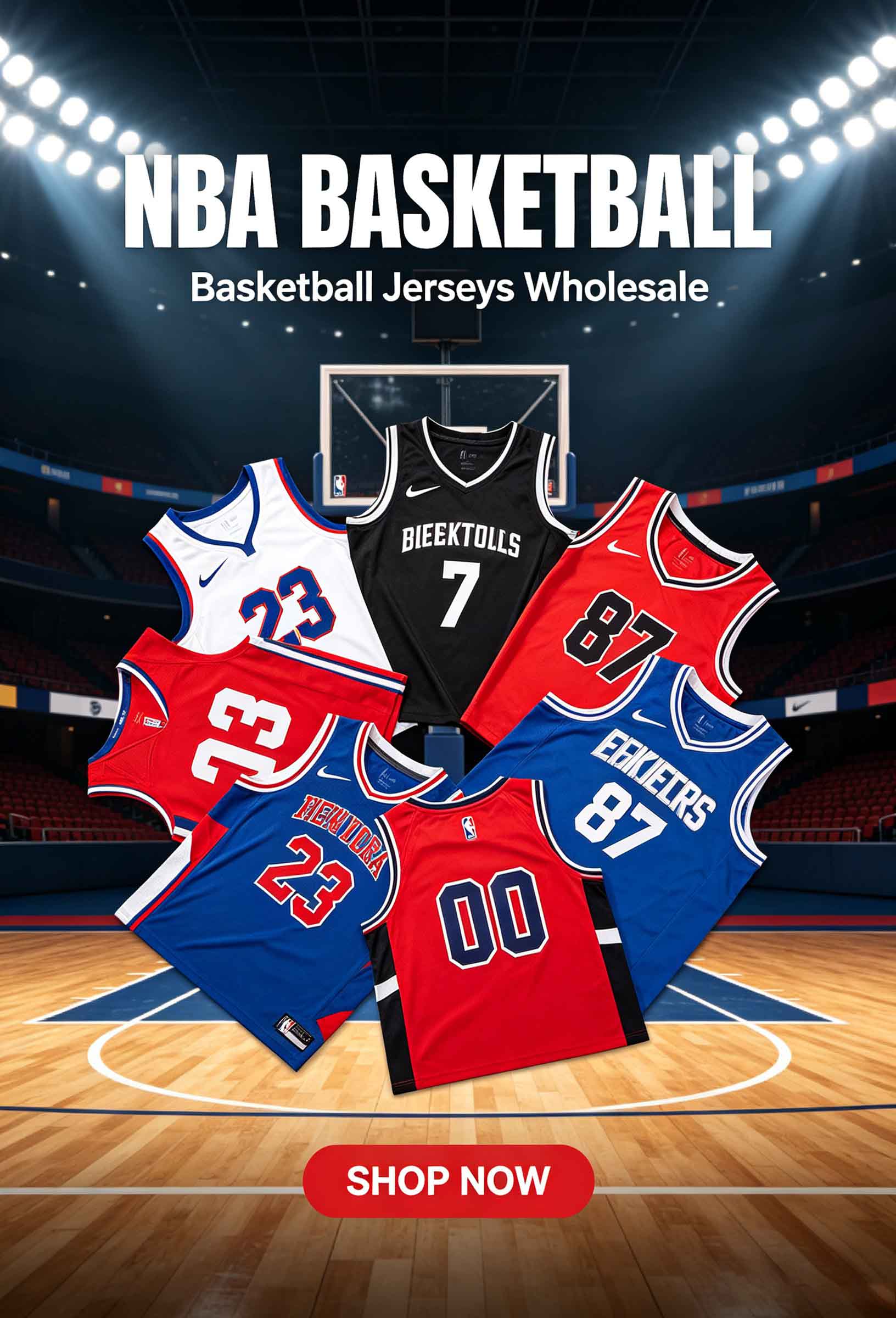
Bulk sublimated basketball jerseys are the fastest-moving SKU in most team-apparel catalogs, and the buyers who win with them are the ones who lock in a single dependable source instead of chasing five. If you are splitting orders across a printer, a stitcher, and a blank supplier, you already feel the cost: stacked freight, mismatched color lots, half-empty size runs, and lead times that slip past opening night.
Sublimation is a different build from a stitched jersey, and buyers who blur the two end up eating returns. In a true sublimated build, the dye is driven into the polyester yarn under heat rather than printed on top of it. The graphics live inside the fiber, so numbers do not crack at the first hard fold and panels do not lift after twenty wash cycles.
The base fabric decides everything downstream. Look for 100% breathable polyester mesh in the 150–170 GSM range for basketball bodies, which moves sweat off the player and dries fast between back-to-back games. Heavier constructions exist for a reason: 220–260 GSM suits hockey shells and 300 GSM heavyweight mesh belongs on football jerseys where the shoulder takes punishment.
Ask for fabric weight in writing, not in conversation. A supplier who quotes "premium mesh" without a number is telling you the spec will change once your deposit clears. Weight, yield per roll, and shrinkage after a 60°C wash should all appear on the spec sheet before you approve a sample.
Trim work is where cheap factories hide. Insist on reinforced collar bands that hold their shape through a hot wash, bar-tacked side vents, and double-needle stitching on the bottom hem. Those three details separate a jersey that survives a 30-game season from one that unravels in the equipment bag by week six.
Hybrid builds are common in league programs: a sublimated body with double-stitched Tackle Twill numbers on the front and back. On that construction, the stitch count matters — roughly 8 to 10 stitches per inch, with a tight zigzag lock around the twill border. Loose, wide stitching is the first thing to fray.
Inside the jersey, soft interior backing sits behind every embroidered or twill element. Without it, the thread ends abrade the chest and shoulder, which is a real complaint on youth uniforms where kids wear the jersey over a bare torso. It costs pennies per unit and prevents a whole category of returns.
Colorfastness testing is not optional at volume. Run a three-cycle wash at 60°C against a gray scale and require a rating of 4 or better before you commit to a reorder. Dark navy, royal, and maroon are the shades that migrate first, and a migrating panel will visibly stain the white trim of the jersey stacked against it.
A working QC standard is AQL 2.5 for major defects and AQL 4.0 for minor ones, applied to a random pull from every carton — not to the top layer of the first box. Measure flat across the chest, body length, and shoulder width against your approved chart with a tolerance of ±1 cm. Anything outside that gets flagged before the shipment leaves the dock.
Size grading is the quiet killer of wholesale margins. Youth S–XL and adult S–3XL should follow a consistent grade rule so a reorder lands on the same fit your buyers already sold through. Request the measurement chart in centimeters and inches, and confirm tall and women's cuts are quoted separately rather than substituted.
This is where a centralized hub changes the math. When you source bulk sublimated basketball jerseys from one warehouse with held inventory, you are not paying three freight bills or absorbing the cost of a printer who ran out of 2XL mid-production. Stock depth across the full size run is worth more than a few cents off the unit price.
Tiered pricing should be transparent and stackable by category. A typical structure breaks at 24, 72, 144, and 500 units, with per-unit pricing dropping at each gate and customization fees quoted separately. Ask exactly what triggers the next tier — piece count per design or total order value — because that difference can swing a quote by 12 percent.
Run the landed-cost math before you commit. Take the unit price, add the decoration charge, spread freight across the carton count, and divide by sellable units. Compare that to your realistic sell-through at retail or team pricing, and you have your margin per jersey. Resellers who skip this step discover their "cheap" supplier was expensive once freight and short shipments were counted.
Dye-lot consistency protects reorders. Keep a signed physical standard for every colorway you carry and require your supplier to hold it on file. When a program reorders six weeks later, matching against a physical swatch beats matching against a photograph on a monitor every time.
Packing discipline saves labor on your end. Pre-packed ratio carts in the sizes you actually sell, poly-bagged individually with a size sticker on the outside, and a carton manifest listing design, colorway, and size breakdown. That manifest is the difference between a two-hour receiving process and a two-day one.
The customization workflow should be short and documented. Send vector art or a clean high-resolution file, a roster spreadsheet with names and numbers, and a size breakdown by player. Approve a digital mockup, then expect production in the 7–10 business day range for standard volumes, with rush capacity available when a season deadline moves.
Protect the finished product with basic care guidance you can pass to your buyers. Wash cold, turn the jersey inside out, skip fabric softener, and hang dry. Heat and softener are what dull sublimated color over a season, and a one-line care card inside the poly bag reduces fading complaints more than any upgrade in fabric.
- Fabric: 100% breathable polyester mesh, 150–170 GSM for basketball bodies
- Construction: double-stitched Tackle Twill numbers, reinforced collar bands, bar-tacked vents
- Comfort: soft interior backing behind all twill and embroidery
- Colorfastness: gray scale rating 4+ after three 60°C wash cycles
- QC: AQL 2.5 major defects, ±1 cm measurement tolerance
- Size range: youth S–XL and adult S–3XL, tall and women's cuts on request
Know the warning signs before you wire a deposit. A supplier who cannot produce a spec sheet, will not name a fabric weight, or quotes a lead time shorter than the production cycle physically allows is quoting a price, not a product. Vague answers on dye lots and QC sampling are the same signal.
Plan the calendar backwards from the season, not forward from the order. Add production days, plus consolidation, plus ocean or air transit, plus a buffer for customs. League buyers who order eight weeks out pay for air freight; buyers who order twelve weeks out get the same jersey at a materially better landed cost.
What is the difference between sublimated and stitched basketball jerseys?
Sublimated jerseys have the design dyed into the polyester fabric, so there is no added weight and no thread to fray. Stitched jerseys use sewn twill or embroidered elements on top of the fabric, which gives a heavier, more dimensional look. Many wholesale programs offer both, and hybrid builds combine a sublimated body with sewn numbers.
What is the minimum order for custom basketball uniforms?
Custom decorated runs typically start at 24 pieces per design, while blank hub stock can ship in smaller mixed-size lots. Pricing tiers usually break at 24, 72, 144, and 500 units, so consolidating designs into one purchase order is the fastest way to reach the next discount level.
How long does production and delivery take?
Standard custom production runs 7–10 business days after mockup approval, plus transit time. In-stock hub items ship from the warehouse without a production queue, which is the practical choice when a season deadline is already close.
Can I mix sizes, colors, and teams in one order?
Yes, and consolidating is the point of a hub. Mixing categories and size runs in one carton plan reduces freight per unit and simplifies receiving, provided the size breakdown is confirmed on the purchase order before production starts.
Pull your size breakdown, lock a color standard, and compare your current landed cost against a tiered quote. Visit Jerseys Wholesale Hub to shop the full NBA jersey catalog, check live stock depth across the size run, and see where your volume lands on the pricing ladder — low MOQ entry, one warehouse, and dispatch that does not wait on a third-party printer.