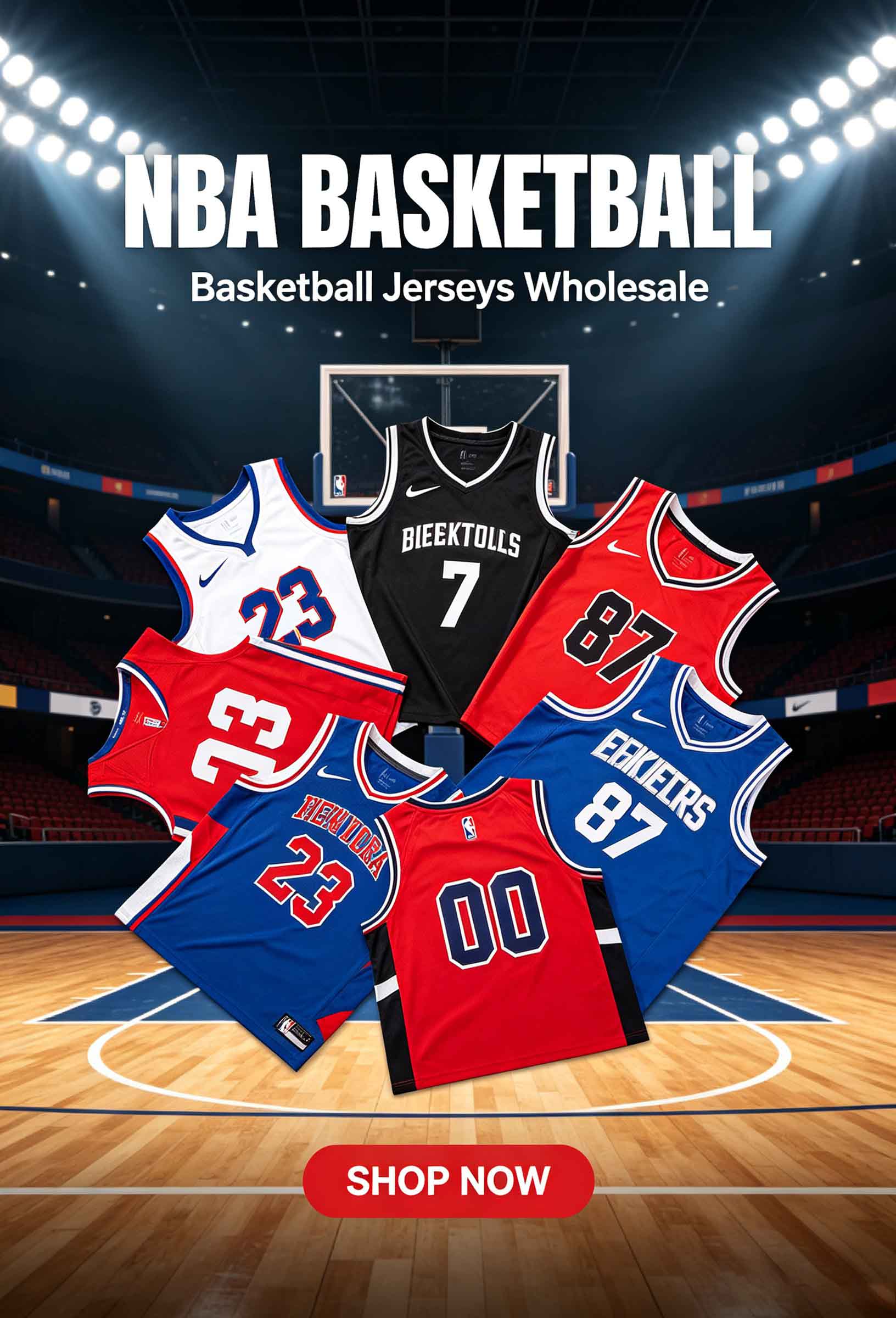
If you're finalizing a jersey order for the coming season, the fabric you specify on the team uniform decides your return rate, your reorder rate, and your margin per carton. Most bulk buyers learn what the best fabric for basketball jerseys actually is after the first shipment lands — after labels are sewn, boxes are sealed, and the invoice is four figures deep. You don't have to learn that way. Fabric quality is measurable in grams per square meter, stitch density, interior backing, and collar construction, and every one of those is a variable you can lock down before production.
Start with the number that matters most: fabric weight. Wholesale basketball jerseys normally sit between 180 GSM and 300 GSM. A 180 GSM lightweight mesh looks fine in a sample but collapses under a real schedule — wash cycles, frequent changing, and two games a week will show hem curl and shoulder seam failure inside six months. If you are supplying leagues with an actual fixture list, that failure rate is not something you can absorb.
For programs that play a real season, the dependable base is 100% breathable polyester mesh. Polyester filament resists shrinkage across repeated washes and holds color under hot locker-room conditions. The mesh structure moves air through the chest instead of trapping it, which matters in summer leagues and poorly air-conditioned gyms where cotton blends simply hold sweat against the skin.
300 GSM heavyweight mesh is the hand feel professional programs keep asking for. It drapes with body, holds shape under heavy embroidery, and reads as structured in photos rather than flimsy. If your buyer base is premium resellers or team stores, heavyweight mesh supports a higher shelf price without the awkward explanation of why the jersey feels thin.
The next specification worth arguing about is double-stitched Tackle Twill numbers. Tackle Twill is a laser-cut polyester twill that is heat-fused to the fabric before sewing. Good factories run two rows of thread at 8 to 10 stitches per inch, back-tack at the corners of digits, and finish the outline instead of relying on a single pass. Anyone who has cut open a cheap jersey knows the difference: one thin line of thread over a glued edge starts lifting after ten washes.
Flip the jersey inside and check the soft interior backing. A thin spunbond or knit backing layer over the embroidery prevents coarse thread and adhesive film from scratching the player's skin. This is one of the first costs that gets stripped out on low bids, and one of the easiest quality signals to verify: pinch the fabric under the shoulder seam and feel for a smooth second layer.
Reinforced collar bands and proper ribbing keep the neckline from turning into a wave after a month. A reinforced band with a double-needle finish and adequate spandex content will stretch past forty wears and still snap back. Once the collar goes slack, the jersey is done no matter how good the numbers look, because the collar is the first thing a buyer sees on the rack.
Z-stitch reinforcement belongs at the armhole seams, the hem opening, and any split point. These are the areas that take multi-directional pull when a player drives to the basket or pulls a jersey over a shoulder. A narrow zigzag distributes that stress and stays intact after a full season of bulk use. If a supplier cannot describe their reinforcement stitching in detail, assume it is a straight lockstitch and price the risk accordingly.
Put the structure into plain terms on your purchase order so the factory cannot improvise:
- Body: 100% breathable polyester mesh, 190–300 GSM, weight matched to your retail tier
- Numbers and letters: double-stitched Tackle Twill with thread color matched to the twill
- Interior: soft interior backing behind every applied number and letter
- Collar: reinforced collar bands with double-needle edge finish
- Stress points: Z-stitch reinforcement at armholes, hem, and side vents
- Care label: fiber content, wash temperature, do-not-iron decoration, country of origin
Decoration method also drives longevity. Embroidered twill patches survive multiple seasons and are the detail experienced buyers feel immediately. Sublimation gives unlimited color but sinks into the yarn and fades toward grey after two or three hard years. Heat transfer is the fastest and cheapest route and the first to peel under heat and humidity. None of these is universally wrong — the decision depends on how often your buyers reorder and how much premium they will pay for stitched construction.
Before committing to a bulk run, run three quick checks on a sample. Pull the mesh across the upper chest and watch for recovery; hold it against gym lighting to spot inconsistent dye lots and thin spots; weigh it by hand against a piece you already know is 300 GSM. Then read the care label, which on a genuine polyester mesh will name the fiber and a wash temperature rather than offering vague claims.
Inspection should be planned, not improvised. A common wholesale standard is AQL 2.5 with 8 to 13 pieces pulled at random from each carton, checking stitch density, collar recovery, backing presence, and number placement. Photograph the findings, require a rework on any carton that fails, and keep the signed inspection sheet on file. Suppliers who know every batch gets sampled tend to keep their output consistent.
Once fabric and construction are settled, availability becomes the practical bottleneck. Building stock from scratch means multiple suppliers, multiple freight bills, and size runs that break at the top end — extended sizes sell out first and stop you from filling a team order. Sourcing through a stocked hub closes that gap, because breathable mesh basketball jerseys held by size and color let you assemble an S-through-3XL run on one purchase order instead of chasing split cartons.
Watch the size charts closely. Factory sizing for Asian-produced uniforms often runs half a size to a full size below US retail expectations, particularly on youth and adult small. Ask for flat-lay measurements instead of trusting the tag, and confirm shoulder width and body length. Resellers usually buy in runs of two pieces per size with extra depth on XL and 2XL, because those sizes clear first.
Write care instructions into the bulk order and include a small care card in each poly bag. Cold wash inside out, tumble low or hang dry, never iron directly on decoration, no chlorine bleach. A card costs cents and measurably reduces the fading complaints that come back six weeks after delivery. League managers and resellers both notice that detail.
Do the math on order composition before you commit. Compare minimum order quantity, tiered wholesale price, pieces per carton, and carton weight together rather than looking at unit price alone. A low entry threshold lets a smaller league or club test the fabric, while tiered pricing protects your margin as volume grows. Price consistency on reorders matters more than a few cents on the first run, which is why most repeat buyers settle on one supply source.
Freight is part of the quality story too. A single consolidated shipment out of a stocking hub usually clears one or two fewer handoffs than split shipments from three factories, and shorter transit means fewer crushed cartons and missing pieces. Confirm whether stock ships from what is already on the floor rather than waiting on a production slot, and ask how peak season is handled. Late August through November is when high school and amateur league demand spikes, so reserve volume early to avoid the queue.
What is the best fabric weight for basketball jerseys? Most buyers land on 190 to 220 GSM for general resale and 300 GSM heavyweight mesh for premium or team-store channels where drape, opacity, and lifespan matter more than unit cost.
Do double-stitched Tackle Twill numbers actually hold up? Yes, when the stitching runs at 8 to 10 stitches per inch with back-tacking at corners. That construction typically survives 50 wash cycles, while a single-thread, glued-edge version often fails around ten.
How many pieces should I inspect from each carton? Eight to thirteen pieces per carton at AQL 2.5 is enough to catch a systematic problem with stitching, collar recovery, or number placement before the goods reach your customers.
How do I keep polyester jerseys from fading? Wash cold, turn the jersey inside out, skip chlorine bleach, air dry when possible, and never press an iron directly onto printed or stitched decoration.
If you are stocking for the next season, compare your current cost sheet against a one-stop source that keeps full size runs on the floor. Start with the live catalog at Jerseys Wholesale Hub to see stocked styles by size and color, check tiered wholesale pricing and low minimums, and confirm dispatch times before the peak rush hits. Buyers who lock fabric specifications first and supply second are the ones who keep their margin when the season starts.