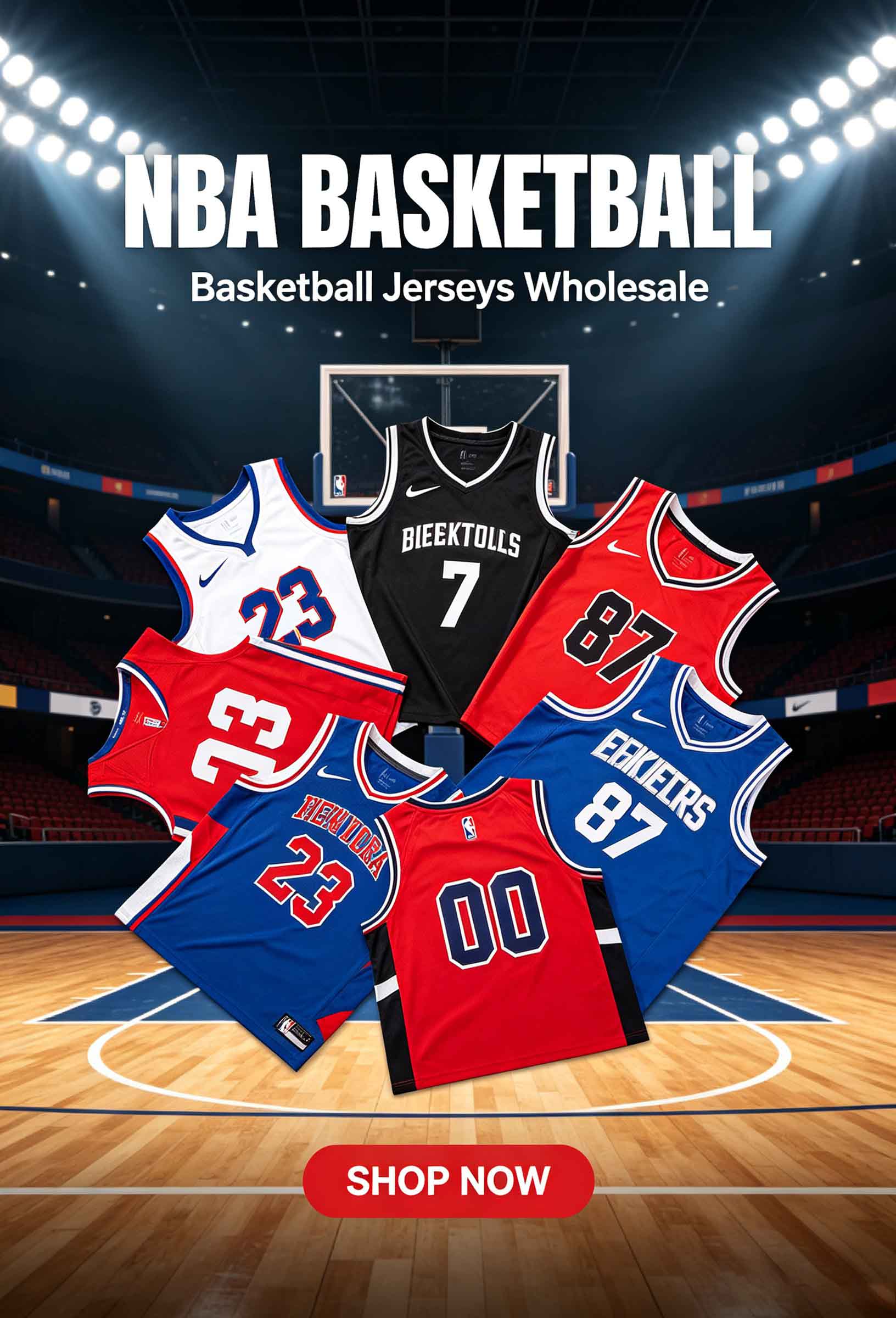
If you are sourcing wholesale bulk Chicago White Sox jerseys for a reseller route, a league uniform program, or a retail pop-up, the biggest risk is not price. It is inconsistency across orders. One batch arrives with crisp twill, the next with thin pressed vinyl, and your repeat buyers notice immediately.
That is why experienced buyers consolidate with a single hub instead of spreading purchase orders across five vendors. A dedicated wholesale hub keeps fabric weight, stitch density, and color matching locked to one spec sheet, so your third reorder looks identical to your first. It also cuts freight, customs paperwork, and the endless back-and-forth that comes with chasing multiple factories.
Here is what actually matters when you are buying baseball jerseys in volume, plus how to spot the specs that separate a real supplier from a trading desk with a website.
The first thing to verify is fabric weight. Most cheap baseball jerseys on the market run 150 to 180 GSM, which feels flimsy and goes see-through under stadium lighting. A serious hub ships 100% breathable polyester mesh at 220 to 260 GSM for baseball, with a tighter knit that holds shape after repeated washes. Ask for the GSM number before you ask for the price. If the supplier cannot give you a number, they do not control the mill.
Button-down construction is the second checkpoint. Authentic-style MLB jerseys need a full placket with reinforced stitching, not a decorative strip glued or single-stitched on. Check that the buttons are sewn with a cross-lock pattern, because loose buttons are the number one return reason on baseball jerseys after sizing. A well-built placket should survive a straight pull test without fraying at the buttonhole edges.
Number and letter application is where most bulk orders fall apart. Flat vinyl prints crack within a season. Proper double-stitched Tackle Twill numbers are layered fabric, cut to shape, and stitched down with a dense satin border. The stitch count per inch matters more than the thread color. Ask your supplier to confirm the twill is pre-shrunk, otherwise the number edges ripple after the first hot wash and the jersey looks counterfeit even when it is not.
Look inside the jersey, too. Any quality baseball jersey above a certain price point should have a soft interior backing behind the embroidery. This is the lightweight fusible layer that keeps rough thread ends from scratching skin. Youth and youth-adjacent sizes especially need it, because kids complain fast and parents write reviews. If the interior feels like sandpaper, the jersey was assembled on a speed line with no finishing station.
Collar bands get ignored by most buyers until their returns spike. Reinforced collar bands with a rib-knit structure hold their shape through the wash cycle and prevent the stretched-out neckline that makes a jersey look used after two wearings. On baseball jerseys, check that the collar is set with a double-needle stitch, not a single overlock. That one detail tells you whether the factory runs a real QC line.
Sizing is the quiet profit killer in bulk baseball jersey orders. Adult sizes typically run S through 3XL, with youth XS through XL. But every factory grades differently. A "large" from one mill can measure a full inch narrower at the chest than the same size from another. Before you commit to five hundred units, request a graded size chart in inches, plus a physical sample in two sizes, and measure them yourself at the chest, body length, and sleeve opening.
For B2B buyers moving mixed quantities, a hub model beats direct factory ordering in one specific way: you can fill gaps. If a league order needs 40 medium, 60 large, 80 XL, and 20 XXL, a single factory will often push you toward one-size-heavy production to hit their minimum. A hub with standing inventory lets you pull as-needed and keep your size curve honest. That is a real margin advantage when your customers actually want to buy the sizes they wear.
Color matching across a reorder is another hub strength. Team colors are not generic. Chicago's navy and the specific shade used on the white home jerseys have to match your first shipment exactly, or the rack looks off and resale price drops. Reputable hubs keep dye lots documented and pull reorders from the same lot when possible. Ask whether they track dye lot numbers. The answer tells you how they operate.
When you evaluate any supplier, run a practical three-part sample check. It takes twenty minutes and eliminates most bad vendors.
- Weight test: weigh the jersey on a kitchen scale and compare against the stated GSM; a 230 GSM jersey in adult large should land in a believable range, not feel paper-thin.
- Stitch test: flip the jersey inside out, count stitch density on the twill border, and tug the number corner firmly. It should not lift or pucker.
- Wash test: run the sample through two cold wash cycles and air dry. Check for color bleed, seam distortion, and collar stretch.
If you want to see how a consistent spec sheet looks across a full baseball line, review the bulk stitched MLB button down jerseys wholesale hub catalog and compare the listed fabric weights and construction notes against whatever samples you currently have on your desk. The gap is usually obvious within a minute.
Pricing structure deserves equal scrutiny. A real wholesale hub publishes tier breaks, for example a lower per-unit rate at 50 pieces, a better one at 200, and a distributor bracket at 500 or more. Watch out for vendors who quote an aggressive number at 100 pieces and then quietly raise it when you reorder 60. Tiered pricing should be transparent and consistent across categories, not negotiated fresh every time your rep changes.
Minimum order quantity is the other number that matters. For resellers testing a new team or a new region, low MOQ access is worth more than a slightly cheaper unit price. A hub that lets you start with mixed sizes and a modest total, then scale to full case quantities once a product proves out, keeps your cash moving instead of locked in inventory. Ask specifically whether MOQ applies per style, per team, or per order.
Lead time and shipping reliability round out the picture. For repeat domestic orders, stocked inventory should ship in days, not weeks. For custom or made-to-order runs, a realistic production window plus a stated buffer is a better sign than an impossibly fast promise. Get the shipping method, transit estimate, and tracking process in writing before you pay a deposit.
Customization is where a lot of B2B buyers get surprised. Bulk sublimated baseball jerseys allow full-color designs with no stitch limitation, which is ideal for travel teams and corporate leagues. But sublimated jerseys have a different feel and a different durability profile than stitched twill. If your buyers expect the stitched look, specify double-stitched Tackle Twill front and back, and confirm the factory can handle custom names and numbers at volume without dropping stitch quality. Custom mlb jerseys with logo, team names, and sponsor patches are all standard requests, but they affect lead time.
Care guidance is worth passing along to your end customers, because it reduces returns. Cold wash, inside out, no fabric softener, air dry or low tumble. Fabric softener coats the mesh and dulls printed or sublimated color faster than anything else. For stitched jerseys, never iron directly over the twill; use a pressing cloth on low heat from the inside. A simple care card in the package costs almost nothing and meaningfully lowers complaint rates.
One more habit separates profitable resellers from busy ones: keep a master spec file per team. Record GSM, twill type, placket construction, collar type, dye lot, and the size chart you verified. When you reorder six months later, you send that file and demand a match. Suppliers who cannot meet a documented spec reveal themselves quickly, and you avoid shipping mismatched stock to your own customers.
If you are running multiple sports categories, consider consolidating your purchasing. A hub that carries football, basketball, hockey, and baseball lets you combine freight and paperwork across a single account, which trims per-unit landed cost without touching product quality. That is the practical reason experienced distributors move toward one reliable source rather than six.
Common questions from buyers new to volume baseball purchasing tend to repeat, so here are straight answers.
- What is a realistic MOQ for a first order? Many hubs start around a modest mixed-size quantity per style. Confirm whether the minimum is per style or per total order before you build your buy sheet.
- How long should stitched numbers last? With cold washing and air drying, double-stitched Tackle Twill should hold shape for years. Cracking usually points to heat-damaged vinyl, not twill.
- Can I mix teams and sizes in one shipment? Yes with most hub operations, which is the primary advantage over a single-team factory order.
- How do I compare quotes fairly? Normalize everything to GSM, stitch type, placket construction, and included customization cost. A lower unit price with thinner mesh is not a lower price.
Ready to buy with a supplier that documents specs, holds stock across teams and sizes, and publishes tier pricing instead of negotiating every order? Browse the full warehouse catalog at www.jerseyswholesalehub.com to compare current baseball inventory, confirm fabric weights and stitched construction, and lock in wholesale tier pricing with low MOQ and fast dispatch. Build your size curve, test one team, and scale from there.