Sourcing wholesale bulk Chicago White Sox jerseys sounds simple until the first shipment lands and half the sizes are wrong, the embroidery thread is off-shade, or the mesh feels like paper compared to your sample. Ask any reseller who has juggled four suppliers for one team order — the real cost is never the unit price, it is the freight consolidation, the re-ships, and the refunds.
That is exactly why a centralized wholesale hub model wins on margin. One warehouse, one packing list, one tracking number, and a verified spec sheet behind every SKU you sell.
Here is what experienced buyers inspect before committing to a bulk order, and how hub-level sourcing changes the math on resale profit.
Start with the fabric weight. Most entry-level baseball jerseys on the market run 160 to 180 GSM, which drapes thin and wrinkles fast on retail shelves. A proper 100% breathable polyester mesh at 220 to 260 GSM holds its shape after repeated washes and gives that authentic double-knit feel players expect. Heavier mesh also photographs better, which matters directly for your online listings and conversion rates.
Stitching is the second filter. Ask whether the front lettering is single-stitch flat applique or true double-stitched Tackle Twill. Tackle Twill means the twill fabric is layered and the satin stitch border is run twice around each letter. It survives industrial laundering and does not peel after ten wears. Cheap heat-press vinyl looks identical in a product photo and fails in three weeks — that failure becomes your customer service problem, not your supplier's.
Inside the jersey, look for soft interior backing behind every embroidered patch and number. This is the layer that prevents the back of the stitching from scratching the skin. It is a small detail that separates a jersey a player will wear all season from one they complain about after one game.
Collar construction gets overlooked constantly. A reinforced collar band with a taped neck seam keeps the V-neck or crew neck from stretching into a wavy mess. On button-down baseball styles, check that the placket is stitched down fully, not spot-tacked. Spot-tacking is the fastest place to hide cost, and it is the first thing to fail.
Button-down baseball jerseys add a size-adjustment variable. Confirm that the buttons are sewn with a lock stitch and that buttonholes are cleanly cut, not frayed. Frayed buttonholes are a tell that the factory skipped a finishing step on the whole run.
Now think about your order structure. Buying all four major sports categories from one hub means you ship mixed pallets instead of managing four freight relationships. That single change usually cuts per-unit landed cost by a meaningful percentage even when the quoted unit price is identical.
Tiered wholesale pricing works on volume brackets, and the smart move is to design your assortment so your total order pushes into the next bracket without over-committing to a single team or size. A mixed cart of MLB, NFL, NBA, and NHL stock reaches a higher bracket faster than a single-category order of the same dollar value.
If you want the full picture on stocked baseball inventory and how the bracket pricing layers across categories, review custom baseball jerseys bulk availability before you lock your purchase order. Knowing exactly what is sitting on the floor prevents the classic mistake of overselling a style that is down to scattered sizes.
Quality control on incoming bulk is not optional. Run a three-point inspection on every production lot:
- Stitch density check: count stitches per inch on the numbers — 8 to 10 per inch with no skipped or loose loops indicates a properly calibrated machine.
- Shade and logo alignment: compare three random units against your approved sample under daylight, not warehouse lighting. Team color drift is the number one reason bulk orders get rejected at retail.
- Size-grade verification: measure chest width flat across at least one unit per size before packing. A one-inch drift across a size run creates returns you cannot recover.
Ask for a pre-shipment inspection photo set on any order above your standard restock volume. Reputable hub operations will document the lot before it leaves the dock, which protects both sides.
Size planning deserves its own pass. For baseball, most adult buyers should stock chest measurements rather than letter sizes alone, because sizing varies by cut. A useful baseline for adult baseball jerseys:
- S: 34 to 36 inch chest
- M: 38 to 40 inch chest
- L: 42 to 44 inch chest
- XL: 46 to 48 inch chest
- 2XL and up: add 2 inches per size step
Stock a ratio of roughly 2-3-4-3-1 across S through 2XL for a typical reseller run. Adjust upward on XL and 2XL if your market skews adult recreational league rather than youth.
Youth sizing moves differently. Youth orders usually cluster in YM and YL, so thinner depth on YS and YXL prevents dead stock. If you are serving a youth league, confirm the hub can fill those gaps mid-season without forcing you into a full case of one size.
Warehouse turnover matters more than buyers realize. Mesh jerseys stored in humidity without ventilation can develop odor and discoloration even before they ship. A hub that rotates stock on a first-in, first-out basis and keeps inventory in climate-controlled conditions protects the product you paid for.
Shipping speed is the final margin lever. When a league manager needs 40 jerseys in ten days, a supplier quoting three-week production loses the account. Hub stock means the order picks and packs the same week, which lets you promise realistic delivery windows and win repeat business.
Watch for these red flags when vetting a bulk source:
- No fabric weight specification given in GSM
- Unwillingness to send a physical pre-production sample
- Prices that undercut the market by more than 30 percent with no explanation of material
- No stated MOQ or MOQ that changes after you request a quote
- Vague answers on return policy for defective lots
Any one of these alone is survivable. Two or three together usually means the order will cost you more in fixes than the discount saved.
Caring for stitched jerseys properly also protects your resale value on any returns or exchanges. Wash inside out in cold water, skip the dryer, and never press an iron directly onto Tackle Twill lettering. Use a pressing cloth on low heat if a jersey arrives wrinkled from transit — direct heat on twill causes the satin stitch to flatten and the twill to shine.
Store folded rather than hung for heavyweight mesh. Long-term hanging stretches shoulders and distorts the collar band, which is exactly the detail buyers inspect first.
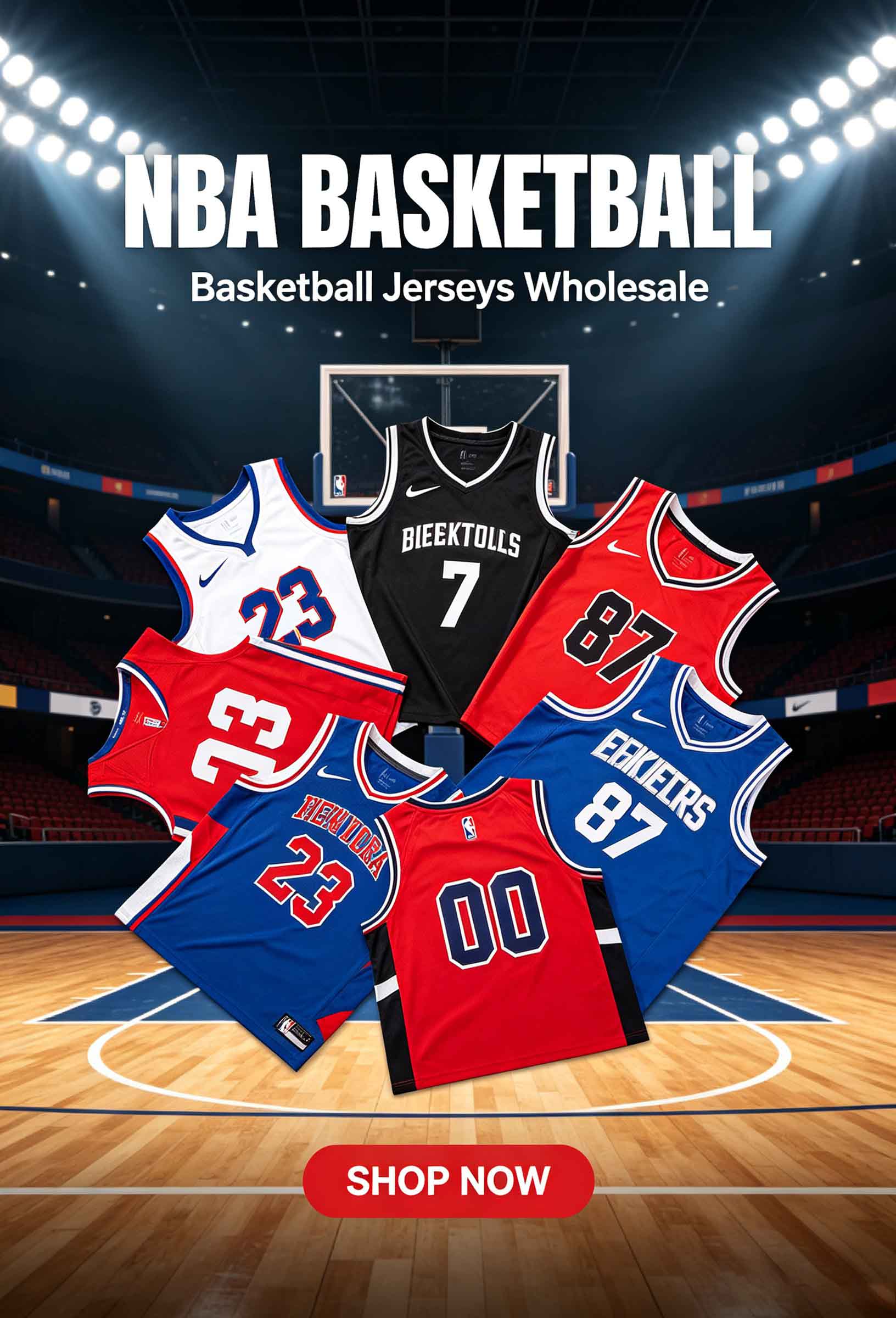
For resellers building a season-long catalog, the practical advantage of a hub is the ability to mix a football, baseball, basketball, and hockey assortment in one purchase order and one shipment. That reduces inbound freight, simplifies receiving, and lets you reallocate shelf space based on what actually sells in your market.
Keep your reorder triggers simple: when any size drops below three units, reorder the full size run rather than just the gap. Filling a single size costs almost the same in freight as a full run and leaves you exposed to the next sell-through cycle.
Working with an established hub also gives you access to consistent spec sheets across seasons. When the mesh weight, stitch type, and collar construction stay the same order to order, your customers stop noticing inconsistencies, and inconsistency is what kills repeat purchase rates in team apparel.
Final point on pricing negotiation: ask about bracket thresholds upfront and plan your purchase calendar around them. If the next tier starts at a certain unit volume, combining a restock with a forward buy on a fast-moving style is often cheaper than two separate orders at the lower tier.
FAQ
What is the minimum order quantity for bulk baseball jerseys?
MOQ depends on the style and whether you are ordering stock or custom decoration. Stock hub inventory typically starts lower than fully custom production runs, which makes it the better starting point for new resellers testing a market.
How do I verify Tackle Twill quality before a large order?
Request a physical sample and count stitch density around the lettering border. Tight, even satin stitching with no visible backing thread on the front face indicates proper construction. Also flex the lettering — it should not lift at the edges.
Can I mix sports categories in one wholesale order?
Yes, and you should. Mixing MLB, NFL, NBA, and NHL stock in a single purchase order consolidates freight and often pushes your total volume into a better pricing bracket than a single-category order of equal value.
How long does shipping take on stocked hub inventory?
In-stock orders generally pick and pack within the same business week, with transit time depending on your destination and chosen freight method. Confirming stock status before you commit to a customer delivery date is always the safer move.
Ready to fill your shelves without juggling five vendors? Head to www.jerseyswholesalehub.com and browse the full hub warehouse catalog across all four major sports. Tiered wholesale pricing, low MOQ entry points, and same-week dispatch on stocked inventory mean you can quote your customers with confidence and keep the margin you earned.