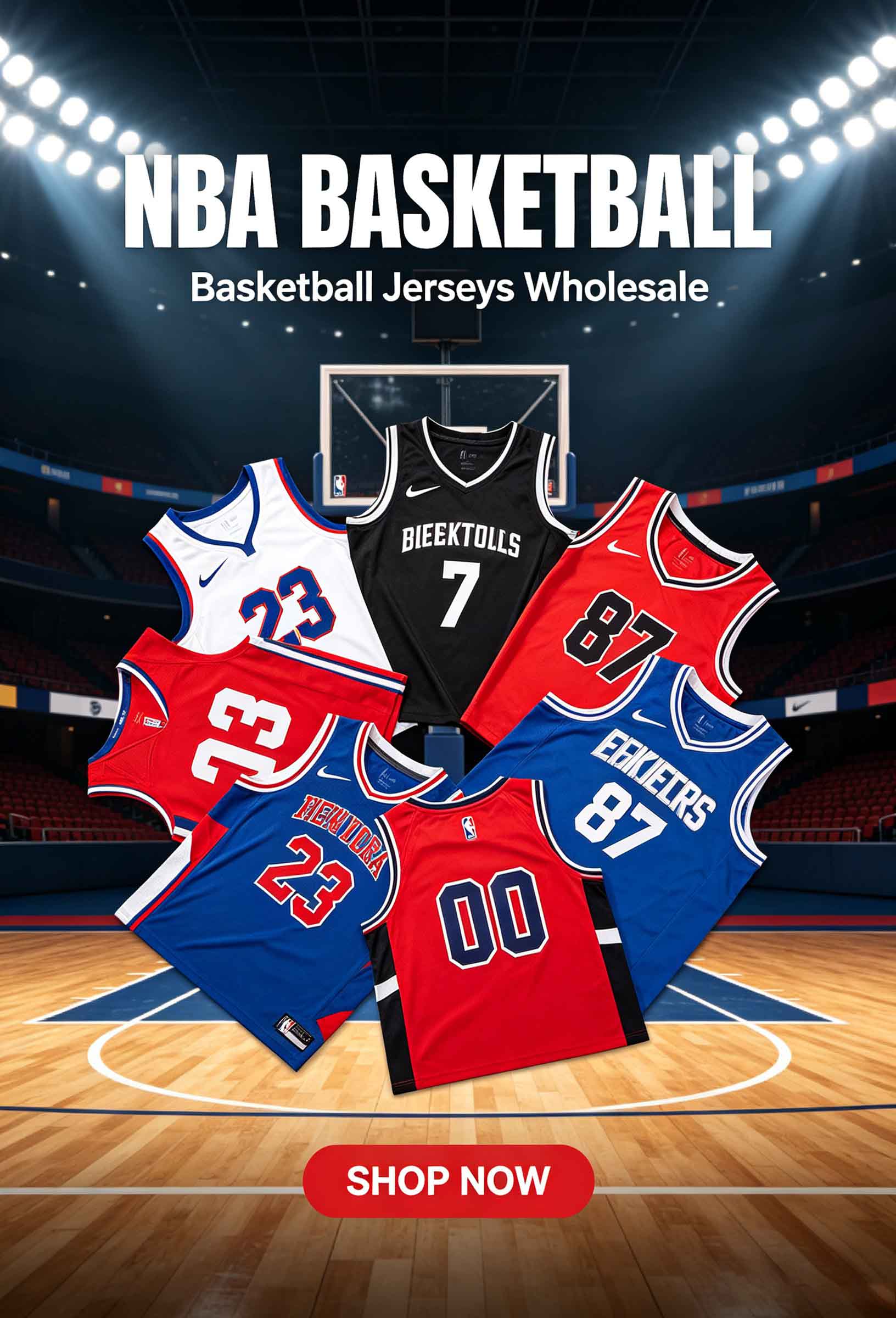
If you are sourcing custom made football jerseys bulk for a reseller network, a school district, or a rec league, the real cost is rarely the unit price — it is the split across four suppliers. Every vendor adds freight, adds a different shade of navy, and adds a week of waiting. That is exactly the problem a single-hub supply model was built to kill, and it is why serious buyers now route their volume through one consolidated warehouse instead of chasing five quotes.
Most buyers feel the pain in three places. First, inconsistent quality: order 200 pieces from one factory and the tackle twill numbers on a reorder will not match the first run. Second, broken size curves — you get 40 larges and zero 3XL, so the whole lot sits. Third, logistics lag: a 15-day production window plus 20 days of transit wipes out a season's selling window before you ever book revenue.
A hub model fixes this because inventory sits in one place. Stock styles ship in 2 to 3 business days. Custom runs enter a single production queue with one quality standard applied to every style, so a Cardinals cut and a Bills cut leave the dock matching each other on weight, stitch, and color depth.
Start with fabric weight, because it is the first thing a customer feels and the fastest way to lose a repeat order. Most entry-level replica mesh lands at 150 to 180 GSM — thin, slightly translucent against light, and prone to collar curl after six washes. The hub standard for bulk programs is 100% breathable polyester mesh at 300 GSM, a heavyweight knit with real body and a matte finish that photographs well on a sales floor.
Weight is not just a feel metric. Heavier mesh holds structure through the shoulder seam, so a sublimated or stitched jersey does not collapse at the yoke after being folded in a poly bag for three weeks. It also holds color better through wash cycles, which matters when your buyer base includes youth leagues that launder entire rosters weekly.
On decoration, the difference between a jersey that survives a season and one that peels by week four is the number application. Double-stitched Tackle Twill numbers use a laser-cut twill base with a stitchdown layer, then lock the perimeter with a tight zig-zag border. Cheap programs single-stitch the outline and rely on heat adhesive underneath — that adhesive lifts the first time the jersey hits hot water.
Check stitch density when you sample. A properly built twill number runs 8 to 10 stitches per inch around the perimeter with no gaps at the corners. Z-zigzag bar tacks at the shoulders, armpits, and side vents stop the stress points from opening under pull. Ask your supplier what needle count and SPI they run on twill; a hub that cannot answer that question is buying from a broker.
The detail buyers forget until returns start piling up is the interior. Embroidered and stitched elements leave thread tails and adhesive residue on the inside face, which scratches across the chest and shoulder blades. A proper build adds soft interior backing behind every number and letter block, so the jersey is wearable straight out of the bag without an undershirt.
Collars deserve their own inspection. Rib-knit collars that lack structure will stretch into a wave after a handful of wears. The spec to demand is a reinforced collar band with a double-needle finish and a taped neck seam, which keeps the opening flat and prevents the shoulder seam from creeping forward.
Sizing is where bulk orders fail quietly. Ask for the grading chart before you commit: chest width, body length, and sleeve length per size, with a stated tolerance of plus or minus half an inch. A well-built curve runs youth S through adult 3XL with consistent half-inch steps. If a vendor cannot send a measurement grid, your 3XL and your small will fit like different garments.
For resellers moving into volume, compare the two decoration routes honestly. Sublimation prints the full design into the fabric, so it never peels, weighs nothing extra, and handles complex allover patterns and gradient fills. Tackle Twill delivers the raised, textured look that authentic-minded buyers expect and holds up better against heavy abrasion. Many hub programs run both on the same 300 GSM body, so you can stock a twill version for retail and a sublimated version for practice and youth programs.
Pricing follows a step ladder instead of a single flat quote. Typical hub tiers break at 24, 48, 96, and 240 pieces per style with size mixing allowed inside each tier, so a buyer can hit a price break without committing to one size. Confirm whether name and number personalization is included at the tier or billed per piece — that one line item swings margin more than the base price does.
Quality control should be defined before the first shipment, not after. A workable standard is AQL 2.5 with a 10 percent random pull per SKU. Inspect four things: stitch integrity at the twill border, color match against the approved lab dip under D65 lighting, dimensional check against the grading chart, and a three-cycle wash test on a sample from each production batch. Log the results per lot — when a reseller disputes a shipment six weeks later, that log is your defense.
When you are comparing programs for custom made football jerseys bulk, weight the warehouse depth as heavily as the price sheet. Deep stock across multiple size runs means you can restock a hot size mid-season instead of waiting on a fresh cut-and-sew cycle. Consolidating stock and custom orders on one purchase order also collapses freight into a single bill and one customs entry.
Care instructions are a reseller's cheapest retention tool. Print them on the hangtag and repeat them at the register. Cold wash inside out at 30°C, no bleach, no fabric softener, hang dry, and never iron directly on twill or a printed panel — press from the reverse with a low setting and a thin cloth between the soleplate and the fabric. Jerseys treated this way hold color and shape through a full season of league play.
Margin math is straightforward once freight is consolidated. A single hub shipment at a tier-4 price, landed once, typically beats a three-supplier split on landed cost even when the per-unit quote looks higher on paper. Add the labor you save on receiving, sorting, and reconciling three invoices, and the gap widens.
Lead times should be quoted in two parts, never one number. Stock programs ship in 2 to 3 business days. Custom decorated runs generally need 10 to 15 business days in production before transit. Build your reorder trigger around that split — if a style sells 30 pieces a week, you need the purchase order in before inventory crosses three weeks of cover.
- Fabric: 100% breathable polyester mesh, 300 GSM heavyweight knit
- Numbers: double-stitched Tackle Twill, 8–10 SPI perimeter, zig-zag bar tacks
- Interior: soft backing behind all stitched elements, taped neck seam
- Collar: rib-knit with reinforced collar band, double-needle finish
- Size curve: youth S through adult 3XL, ±0.5" tolerance on the grading chart
- QC: AQL 2.5, 10% random pull, D65 color check, 3-cycle wash test
- Tiers: 24 / 48 / 96 / 240 pieces per style, size mixing allowed
FAQ
What is the minimum order for a custom bulk run?
Most hub programs open at 24 pieces per style with size mixing inside the order. Below that, stock styles without personalization are the better route — you get the same 300 GSM body without waiting on a decoration queue.
Can I mix teams and sizes on one purchase order?
Yes, and you should. A mixed order keeps your size curve intact across multiple fan bases and still clears the tier break. Confirm per-style minimums before you build the PO so the mix does not split into separate small runs.
How long does a decorated order take?
Plan on 10 to 15 business days in production for stitched or sublimated work, plus transit. Stock, non-decorated styles move in 2 to 3 business days. Order against your sell-through rate, not against the calendar.
Do you handle names, numbers, and team logos together?
Yes. Names and numbers run through the same twill and stitching standard as the main roster marks, and logo placement is set from a vector file so proportions stay consistent across every size in the run.
Pull your size curve and style mix together, then price the whole basket at one tier instead of splitting it across vendors. You can shop the full NFL jersey catalog at www.jerseyswholesalehub.com to see live stock depth, tier pricing, and low minimums — one warehouse, one quality standard, and dispatch that keeps your shelves filled through the season instead of after it.