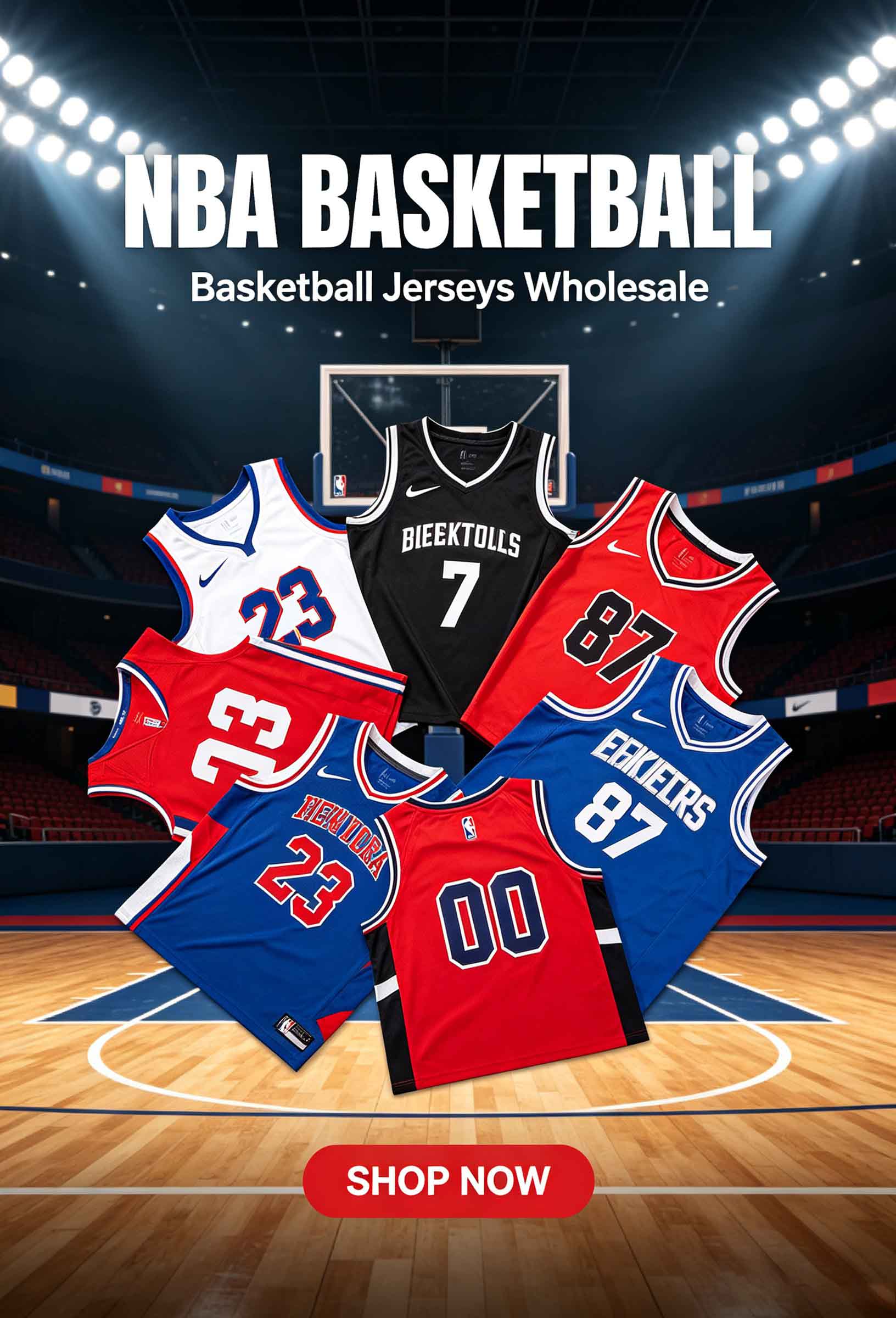
Buying custom made football jerseys bulk usually starts as a simple price comparison and quietly turns into a logistics problem. One vendor has the mesh body, another has the Tackle Twill numbers, and a third claims stock on a color that went backordered three weeks ago without telling anyone.
The hidden cost is never the unit price. It's the consolidation fees, the three separate air shipments, the navy from Vendor A that doesn't match the navy from Vendor B, and the labor hours your team burns reconciling packing lists that all use different size codes.
A hub model removes those line items. Bodies, numbers, nameplates, and matching youth sizes leave one dock on one commercial invoice with one tracking number, which means one point of contact when something needs fixing.
Every football body in the hub runs on 100% breathable polyester mesh, the same open-weave construction used at the pro level. Standard weight sits at 220 GSM for practice and fan stock; the heavyweight 300 GSM option gives a stiffer shoulder and heavier drape for retail-facing programs.
Mesh gauge matters more than most buyers realize. A tighter knit holds shape through repeated wash cycles and resists the snagging that turns a $28 jersey into a damage claim. Ask for the GSM spec before you compare quotes, because a lighter mesh is usually where a lowball price comes from.
Number and letter application is where wholesale suppliers cut the most corners. Sewn options here run double-stitched Tackle Twill — two layers of twill, two passes of thread, edges locked so a corner can't lift after the first wash.
Shoulder seams carry Z-stitch reinforcement, the zigzag lock that stops a seam from running when a player gets grabbed. Collars use reinforced collar bands with an internal strip, so the neckline doesn't stretch into a wavy mess by week six.
Soft interior backing sits behind every embroidered number and letter. It's a small spec that matters for youth programs, where stiff exposed backing causes chafing and kids simply refuse to wear the jersey. The backing also shields the reverse side of the fabric from thread abrasion, which lowers your replacement rate over a full season.
Bulk custom work runs three decoration paths. Sewn Tackle Twill is the premium route and the one that holds resale value; heat-sealed twill is the mid-tier option with faster turnaround; full sublimation is the pick for all-over designs and practice sets. Roster customization covers individual names, numbers, sleeve patches, and chest wordmarks — send a spreadsheet with player name, number, and size, and it loads straight into production.
Build your size run from real demand instead of a flat spread. Most resellers move a 3:4:3 ratio across small, large, and extra-large, and youth tags run two to three sizes smaller than the number printed on them.
- Youth: S (8), M (10-12), L (14-16), XL (18-20)
- Adult: S through 3XL standard; 4XL and 5XL on core colorways
- Fit note: football jerseys are cut loose on purpose — measure chest circumference, not height
Every lot is sampled against an AQL 2.5 standard before it ships. Inspectors verify stitch density, twill alignment, colorfastness, and measurement tolerance held to plus or minus one centimeter. A stitch pull test runs on ten percent of units per lot — if a Tackle Twill corner lifts under a 15-pound pull, that lot goes back to the floor.
Buyers who need a full season of stock in one drop can review the colorways, tier breaks, and live inventory behind custom made football jerseys bulk orders before committing budget.
Pricing runs on a published ladder that rewards volume without forcing you to tie up cash you haven't turned yet. Entry quantities are low enough for a test order, and per-unit cost steps down at each break.
- Tier 1 — 25 to 99 units: test-order friendly, lowest MOQ
- Tier 2 — 100 to 299 units: standard reseller pricing
- Tier 3 — 300 to 999 units: distributor rates
- Tier 4 — 1,000+ units: program pricing with locked freight
Freight is quoted at order time, not after the fact. In-stock domestic orders dispatch within 3 to 5 business days; international bulk moves air or sea depending on your landed-cost tolerance and in-season deadline. If you're restocking mid-season, ask about split shipments — sending 60 percent now and holding the balance at the hub keeps your shelf full without paying storage on inventory you haven't sold.
Replenishment is the real advantage of buying through a hub rather than a one-off factory run. Single-unit top-ups on core colorways let you refill a broken size without buying 50 jerseys you don't need. Keep a running size-run report on your best sellers and treat 15 percent remaining stock as your reorder trigger, not zero.
Run the margin math before you commit. A jersey landed at $19 with a $12 freight share selling at $45 leaves roughly 31 percent margin; the same jersey at Tier 3 pricing leaves closer to 45 percent. That gap is the reason most resellers move up the ladder once a colorway is validated instead of sitting at entry volume all season.
Pass care instructions to your end customers and your return rate drops. Cold wash inside out, no bleach, no fabric softener, hang dry — heat is what fades mesh and shrinks twill. Never press an iron directly onto a sewn number; use the reverse side with a cotton barrier, or hold low steam two inches away. Store heavy embroidery folded rather than hanging long-term, since the weight of Tackle Twill can pull a shoulder seam over a few seasons.
Order timing separates a smooth season from a scramble. League buyers should lock stock six to eight weeks before kickoff, and resellers chasing holiday volume want inventory landed by early October. Because product moves through our own hub instead of a chain of brokers, the navy you approved in March is the navy that arrives in your June reorder.
What is the minimum order for custom made football jerseys bulk? Entry tiers start at 25 units per design, which covers most youth programs and small reseller test runs. Custom name and number rosters are available at that same entry point.
How long does bulk production take? In-stock colorways ship in 3 to 5 business days. Fully custom sewn orders typically run 2 to 3 weeks in production plus transit, depending on roster size and decoration method.
Are the numbers actually stitched or printed? Sewn options use double-stitched Tackle Twill with soft interior backing. Heat-sealed and sublimated options are available, but they're labeled separately so you know exactly which process you're paying for.
Can I mix sizes and colorways in one order? Yes. Mixed size runs and multi-colorway orders count toward the same tier break, which is the main reason buyers consolidate at a hub instead of sourcing piecemeal across four suppliers.
Stop paying consolidation fees to patch together a single roster order. Jerseys Wholesale Hub NFL stock ships from one warehouse with published tier pricing, low MOQ entry, and same-week dispatch on in-stock colorways. Browse the full hub catalog at www.jerseyswholesalehub.com, build your size run, and lock season pricing before the next tier break moves.