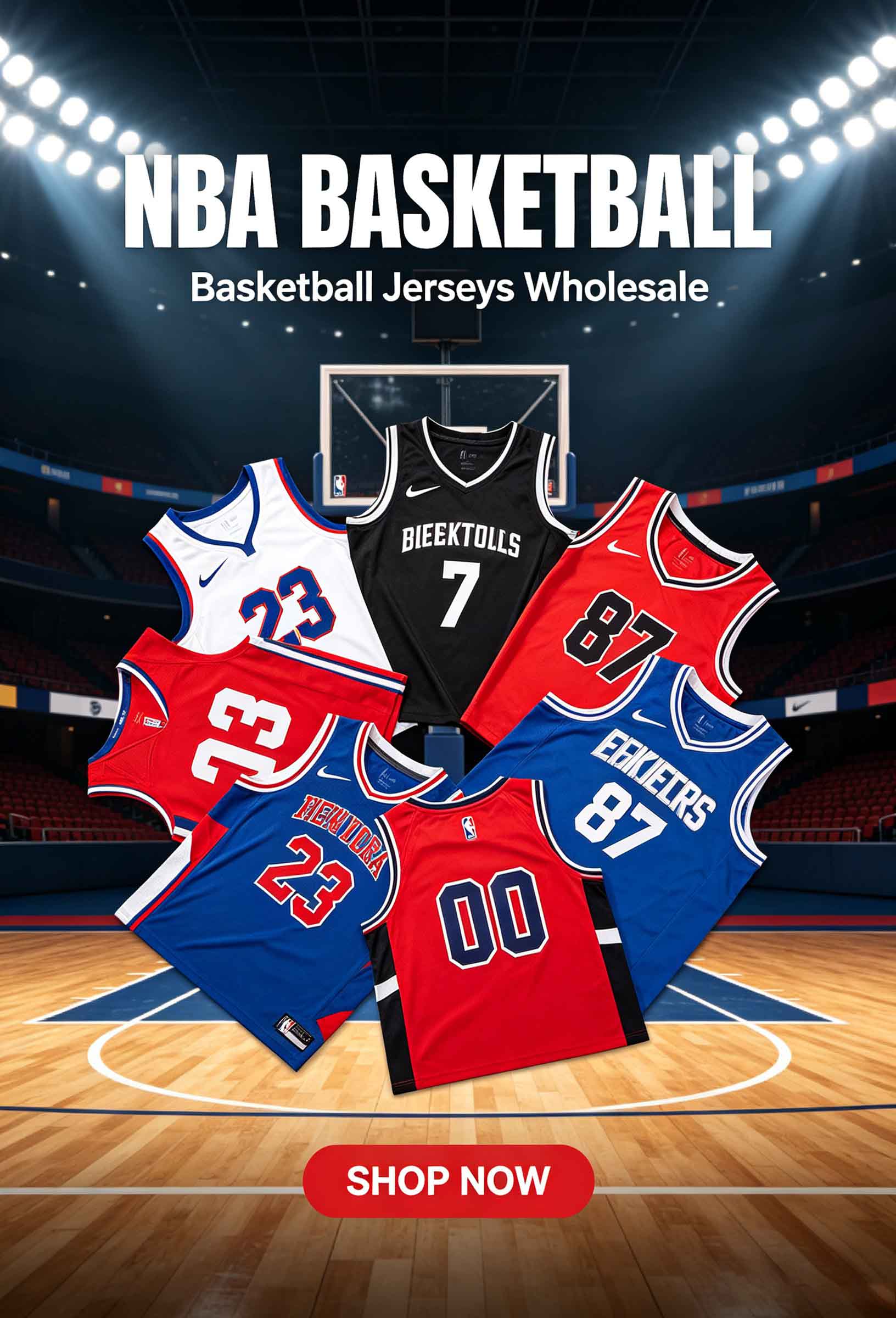
Ask any experienced buyer and they will tell you the best fabric for NFL jerseys is the one that still looks retail-ready after twenty wash cycles. That is the difference between wholesale NFL jerseys that move off your shelves at full margin and a pallet of returns you eat yourself.
Most resellers get burned in the same three ways: splitting orders across four suppliers, paying four sets of freight, and receiving four different mesh weights that look nothing alike on a rack. Then a league client reorders and half the size run is out of stock. That is exactly the gap a consolidated Hub model was built to close.
Fabric is where the money hides. The industry standard for a real game-style jersey is 100% breathable polyester mesh, and the weight class matters more than the print. A 300 GSM heavyweight mesh drapes with structure and holds tackle twill without sagging, while a 180 GSM budget mesh goes limp at the shoulder and wrinkles across the chest panel after two wears.
Mesh construction is not just about thickness. A tight, uniform open-weave knit creates airflow channels that pull heat off the torso and dries fast after a summer doubleheader. Loose, uneven knitting snags on bleachers, velcro, and shoulder pads, and those pull threads travel.
Watch for poly-cotton blends sold as mesh. They feel soft in the bag but pill under friction and lose their deep team colors faster than 100% polyester. Colorfastness testing on a rub cycle is the fastest way to spot the difference before you commit to a 500-piece run.
Numbers and names are the second quality signal. Proper double-stitched Tackle Twill numbers are layered, embroidered, and stitched down at 8 to 10 stitches per inch. Cheap versions use heat-pressed vinyl that peels from the corner after a few dryer cycles.
Look for Z-stitch reinforcement at the corners and points of each numeral. That angled backstitch stops the twill from lifting when the jersey is pulled on and off repeatedly, which is the number one cause of number-edge failure in youth and practice programs.
Soft interior backing is what separates a jersey a player keeps from one they complain about. A lightweight tricot lining behind the twill blocks stitch thread from scratching the chest and shoulders, and it anchors the embroidery so the fabric does not pucker underneath.
Reinforced collar bands are another tell. Quality collars use a ribbed knit with a spandex blend, double-needle stitched so the neckline snaps back into shape instead of stretching into a wavy oval after a season of wash cycles.
The same logic applies to shoulder yokes and side seams. Bar-tacked stress points at the armhole and a clean flat side seam prevent the twisting that makes a rack of jerseys look used before anyone buys one.
Consistency is the hardest part to source across multiple vendors. Ordering from a hub that pulls all wholesale stitched NFL jerseys from the same production standard means the 2XL you ship in October matches the 2XL you shipped in July, down to the mesh tone and the twill height.
Run a proper incoming QC check on every bulk shipment. It takes minutes per carton and saves thousands in chargebacks.
- Stitch density: confirm 8-10 SPI on numbers, names, and collar bands.
- Measurement tolerance: chest and body length within +/- 0.5 inch of spec across the full size run.
- Colorfastness: rub test on chest, shoulder, and number fabric before approving.
- Logo placement: check shoulder crest alignment and number centering on at least 10% of the carton.
- Needle holes and puckering: reject lots showing stretched weave around embroidery.
Pull a pre-production sample before every large run and wash it five times in cold water. If the mesh still holds its shape, the twill edges sit flat, and the colors have not bled into the white panels, that supplier's standard is repeatable.
Sizing is the other silent margin killer. NFL game-style cuts run roomier through the chest and longer in the body than fashion replicas, so your size curve should weight toward L, XL, and 2XL for adult team orders. Youth runs typically break down closer to evenly across S, M, and L.
- Adult S: 34-36 inch chest, 28 inch body length
- Adult M: 38-40 inch chest, 29 inch body length
- Adult L: 42-44 inch chest, 30 inch body length
- Adult XL: 46-48 inch chest, 31 inch body length
- Adult 2XL: 50-52 inch chest, 32 inch body length
Never fill a bulk order from a single middle size. Missing 2XL and 3XL is the fastest way to lose a league account, because those are the sizes that sell out first and reorder last.
Care instructions protect your customers' investment and reduce your return rate. Print a short care card and include it with every wholesale lot.
- Machine wash cold, inside out, with like colors.
- Skip bleach and fabric softener, both break down polyester mesh fibers.
- Hang dry or tumble on low; high heat is what fades twill and shrinks collars.
- Do not iron directly on numbers or letters; press through a thin cotton cloth on low if needed.
- Store folded, away from direct sunlight, to slow color fade on darker panels.
Fading is almost always a heat and detergent problem, not a fabric problem. Sun drying on a line for hours is the second biggest cause after hot-water washing, so recommend shade drying for dark navy, black, and deep red colorways.
If you are already running an NFL program alongside baseball, basketball, or hockey accounts, consolidating those buys into one warehouse changes your freight math. One consolidated shipment from one pickup point beats four LTL bills, four customs entries, and four sets of tracking headaches.
Tiered pricing keeps distributors profitable. Volume brackets should reward bigger commitments, but the entry MOQ has to stay low enough that a new reseller can test a market without tying up six figures in inventory.
Restock speed is what wins repeat business. When a team adds a playoff run, your customer does not want a six-week lead time. Hub stock with immediate pull-and-ship capability on core sizes keeps the reorder in your pocket instead of a competitor's.
Q: What is the best fabric for NFL jerseys in a hot climate?
A: 100% breathable polyester mesh in the 280-300 GSM range. It pulls moisture off the body, dries quickly, and keeps its shape better than lighter budget mesh over a full season.
Q: How do I tell a stitched jersey from a printed one in a bulk lot?
A: Flip the jersey inside out. Real Tackle Twill shows layered embroidered numbers with visible stitching and a soft backing layer. Printed or heat-pressed versions show a flat vinyl edge with no thread.
Q: What is a reasonable MOQ for a first bulk order?
A: Most programs start effectively with a small test run on core sizes, then scale into full size curves once the fit and colorfastness are confirmed. Ask your hub for the current tier break before you build the PO.
Q: Will stitched numbers survive repeated washing?
A: Yes, when the twill is double-stitched with Z-stitch corner reinforcement and washed cold inside out. Heat and bleach cause more damage than the stitching itself.
Stop patching together orders from scattered vendors and guessing whether the mesh weight will match. Go to shop the full NFL jersey catalog at Jerseys Wholesale Hub to see live stock depth, tiered wholesale pricing, low entry MOQs, and fast bulk dispatch on stitched mesh jerseys built to hold their color and shape season after season.